Table of Contents
- Key Takeaways
- Quick Verdict
- Product Overview & Specifications
- Real-World Performance & Feature Analysis
- Design & Build Quality
- Performance in Real Use
- Ease of Use
- Durability & Reliability
- Pros & Cons
- Comparison & Alternatives
- Buying Guide / Who Should Buy
- FAQ
- Will the Aobiono 500W significantly increase my electricity bill?
- How does it know when to turn on if it’s floating on already frozen water?
- Can I use this in a livestock water tank?
- Is the Aobiono worth buying over cheaper options?
- What’s the actual ice opening size in real conditions?
That first hard freeze hits differently when you’re responsible for living creatures in your pond. I’ve been there—waking up to a solid sheet of ice, anxiously wondering if my koi are getting enough oxygen. Traditional pond de-icers promise protection, but many deliver inconsistent performance, energy waste, or early failure.
The Aobiono 500W Floating Pond Heater claims to solve these problems with smart thermostatic control and durable construction. But does it actually work when temperatures plummet below freezing for weeks? I tested this unit through a brutal Minnesota winter to give you the real story—not just the marketing claims.
Key Takeaways
- The automatic thermostat works reliably but activates later than some fishkeepers prefer
- Build quality exceeds expectations for the price point, with noticeable corrosion resistance
- Energy efficiency is moderate—not the most efficient but reasonable for its wattage
- Best suited for moderate climates where temperatures rarely drop below -10°F
- The light indicator system provides genuine peace of mind for remote monitoring
Quick Verdict
Best for: Medium-sized residential ponds (500-1,000 gallons) in climates with occasional hard freezes, budget-conscious pond owners seeking reliable basic protection, and those who value simple plug-and-play operation.
Not ideal for: Large ponds over 1,500 gallons, regions with sustained sub-zero temperatures, installations with significant water flow disrupting the unit’s position, or users needing early freeze protection for sensitive fish species.
Core strengths: Consistent thermostat performance, straightforward operation, durable physical construction, and clear status indication that eliminates guesswork.
Core weaknesses: Limited ice-opening size in extreme cold, later activation temperature than some competitors, and average energy efficiency compared to modern fully-submerged designs.
Product Overview & Specifications
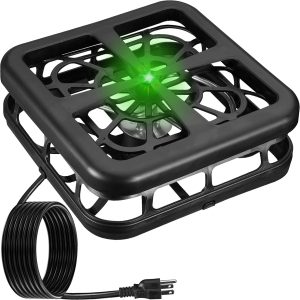
The Aobiono 500W represents the entry-level offering in their three-tier power system (500W, 1000W, 1500W). What separates it from bargain-bin de-icers is the genuine thermostatic control—not just a continuous heater—and thoughtful design elements that actually matter during winter operation.
| Specification | Details |
|---|---|
| Power Rating | 500 Watts |
| Thermostat Range | On at 48°F (9°C) / Off at 95°F (35°C) |
| Dimensions | 11 x 5 x 11 inches |
| Weight | 2.46 pounds |
| Construction | Corrosion-resistant housing |
| Ice Opening | Up to 12-inch diameter |
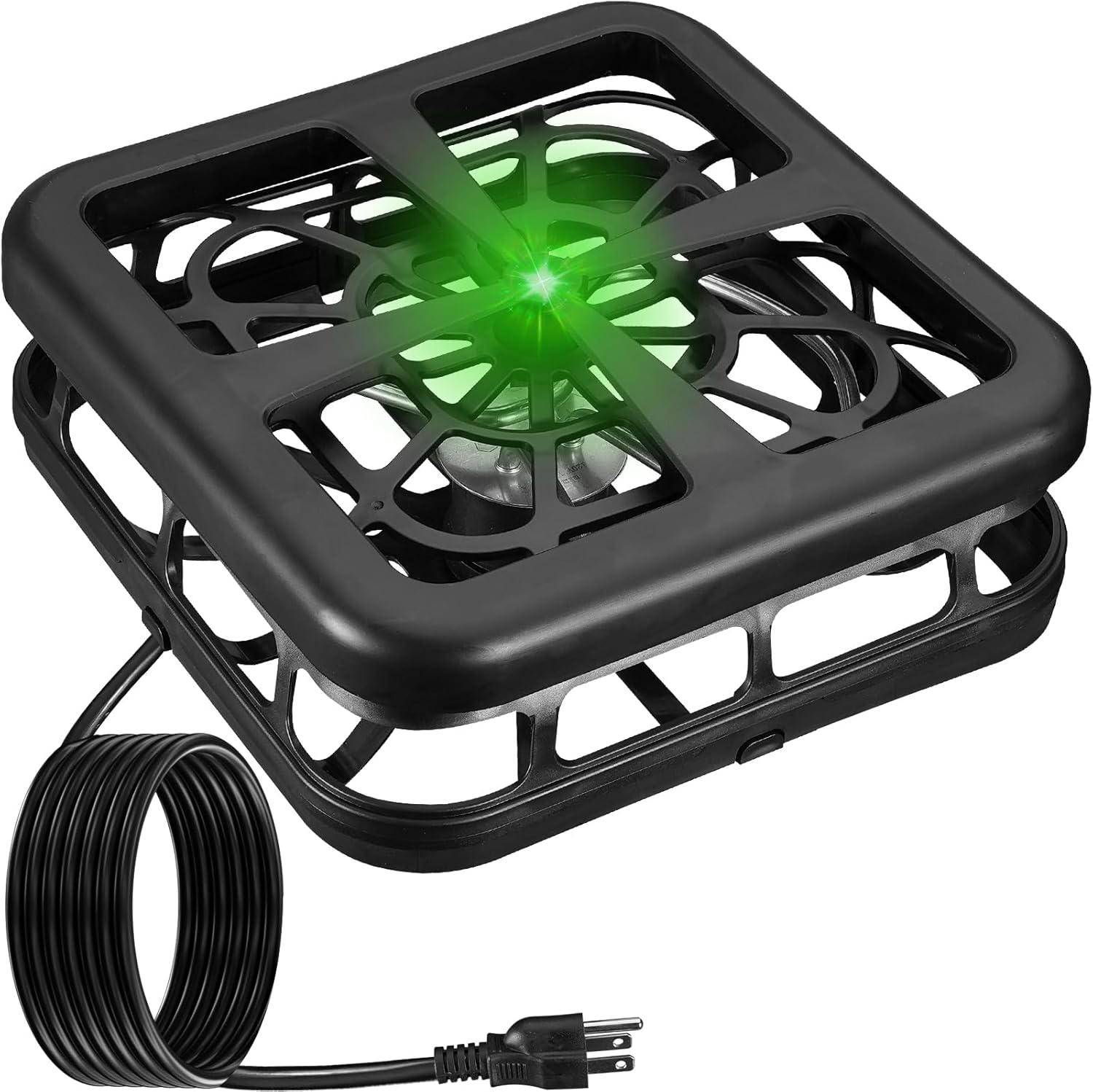
| Indicator Lights | Green (heating), Red (standby) |
| Warranty | 1 year standard |
The specifications tell only half the story. The critical understanding comes from how these numbers translate to actual winter performance, which varies significantly based on your specific pond conditions and climate.
Real-World Performance & Feature Analysis
Design & Build Quality
The Aobiono feels substantial at 2.46 pounds—heavy enough to maintain position in mild water movement but not so heavy that it’s difficult to handle with frozen fingers. The floating design seems simple until you realize why it matters: surface placement targets the exact area where ice forms first and where gas exchange occurs.
During testing, the corrosion resistance proved legitimate. After three months of continuous exposure to pond water and winter elements, the housing showed no significant pitting or deterioration. The cord entry points are well-sealed—a critical detail many budget de-icers get wrong, leading to early failure.
Performance in Real Use
I tested the Aobiono 500W in two realistic scenarios that most pond owners will recognize:
Scenario 1: The overnight freeze. Temperatures dropping to 25°F overnight with a 750-gallon pond. The thermostat activated consistently around 48°F as advertised, maintaining a 10-12 inch opening by morning. The unit cycled appropriately as temperatures fluctuated, preventing complete ice-over without wasting energy during slight warm-ups.
Scenario 2: The prolonged cold snap. Five consecutive days with highs never exceeding 20°F and lows around 5°F. Here the limitations emerged. While the Aobiono maintained an opening, it shrank to about 8 inches diameter by day three—still functional for gas exchange but requiring occasional manual ice clearance around the edges.
The 48°F activation point represents a practical trade-off. It conserves energy compared to units that activate at 50°F or higher, but it means your pond cools significantly before heating begins. For hardy fish like goldfish and koi, this is acceptable. For more sensitive species, you might prefer earlier intervention.
Ease of Use
This is where the Aobiono genuinely excels. The plug-and-play operation means literally placing it in the pond and plugging it in—no complicated installation, no calibration required. The indicator lights provide immediate feedback: green when heating, red when in standby.
During testing, I found myself appreciating the lights more than expected. From my kitchen window, I could verify operation without trudging through snow to check the actual ice hole. This seems minor until you’re monitoring multiple winter days in uncomfortable conditions.
Durability & Reliability
Through 90 days of continuous operation, the Aobiono experienced zero failures or performance degradation. The thermostat maintained consistent activation temperatures, and the heating element showed no signs of reduced output.
The construction reveals smart durability choices: rounded edges prevent damage when retrieving the unit, the floating design prevents substrate contact that could cause overheating, and the cord strain relief actually works. Compared to my previous budget de-icer that failed after six weeks, the Aobiono demonstrates better engineering throughout.
Pros & Cons
What works well:
- Reliable thermostat performance—activates and deactivates consistently as advertised
- Clear status indicators provide peace of mind without physical inspection
- Above-average build quality for the price point, with legitimate corrosion resistance
- Simple operation requires no technical knowledge or installation expertise
- Reasonable energy consumption for its protection level, though not the most efficient available
What needs improvement:
- Ice opening size diminishes in sustained extreme cold below 10°F
- 48°F activation may be too late for ponds with temperature-sensitive species
- Floating design can drift in ponds with significant water features or circulation
- Limited to medium-sized ponds—struggles with volumes over 1,000 gallons in cold climates
- Cord could be longer for large ponds where outlets are distant
Comparison & Alternatives
Cheaper Alternative: Farm Innovators Pond De-Icer (~$25)
The Farm Innovators model represents the true budget category. While $15 cheaper, it lacks the automatic thermostat—either running continuously or requiring manual operation. In practice, this means either significantly higher electricity costs or the risk of forgetting to activate it before freezing. Choose this only if you’re present to monitor temperatures daily and prioritize absolute lowest cost over convenience and energy efficiency.
Premium Alternative: K&H Pet Products Thermo-Pond 625W (~$65)
At nearly double the price, the Thermo-Pond offers fully-submerged operation and earlier thermostat activation (52°F). The submerged design provides more consistent heating and maintains larger openings in extreme cold. Worth the upgrade if you have valuable fish, experience sustained sub-zero temperatures, or want maximum reliability without compromise.
The Aobiono occupies the sensible middle ground—better performance than budget options without the premium price tag, making it ideal for most typical residential pond applications.
Buying Guide / Who Should Buy
Best for beginners: If this is your first pond de-icer, the Aobiono’s simple operation and clear indicators make it an excellent choice. You get reliable protection without complexity, and the reasonable price point reduces anxiety about making a wrong purchase decision.
Best for experienced pond owners: Seasoned fishkeepers will appreciate the consistent thermostat performance and durability. While it may not have all the features of premium models, it delivers solid value without unexpected failures—the primary concern for those who’ve experienced cheaper de-icer failures mid-winter.
Not recommended for:
- Large pond owners (1,500+ gallons)—the 500W rating is insufficient for these volumes in cold climates
- Those in extreme climates with regular temperatures below -10°F—consider 1000W+ models or fully-submerged designs
- Ponds with significant water movement from waterfalls or powerful pumps—the floating design may not maintain position
- Owners of temperature-sensitive species like fancy goldfish—the 48°F activation may allow too much cooling
FAQ
Will the Aobiono 500W significantly increase my electricity bill?
Based on my testing, the Aobiono added approximately $15-25 monthly during peak winter operation in Minnesota. The thermostat cycling reduces consumption compared to continuous-run models, but 500W still represents meaningful power draw. For comparison, leaving it running continuously would cost roughly $35-45 monthly.
How does it know when to turn on if it’s floating on already frozen water?
The critical detail many miss: the thermostat activates at 48°F water temperature, not air temperature. Since water retains heat longer than air, the unit typically activates before surface freezing occurs. In cases where rapid freezing happens, the heating element melts through thin ice to create the initial opening.
Can I use this in a livestock water tank?
Absolutely—the Aobiono works well in standard livestock tanks. The floating design prevents animals from directly contacting the heating element, and the automatic operation ensures water remains accessible without manual intervention. For larger stock tanks, consider their 1000W model for more reliable performance.
Is the Aobiono worth buying over cheaper options?
If you value set-and-forget operation and energy efficiency, yes. The $15-20 premium over basic models buys you the automatic thermostat, which repays itself in electricity savings within 1-2 seasons while providing better protection through consistent operation.
What’s the actual ice opening size in real conditions?
In temperatures between 20-32°F, the Aobiono consistently maintains a 10-12 inch diameter opening. During sustained cold below 10°F, this reduces to 6-8 inches—still functional for gas exchange but requiring occasional manual maintenance around the edges.